When the grid fails in the middle of a production shift, a generator stops being a spare asset and becomes the business’s main power source. The International Energy Agency (IEA) reports that 730 million people worldwide still lacked access to electricity in 2024, with about eight in ten living in sub-Saharan Africa. In markets where power interruptions are a concern, buyers need to balance purchase price with fuel consumption, operating conditions, expected runtime, and access to maintenance and spare parts.
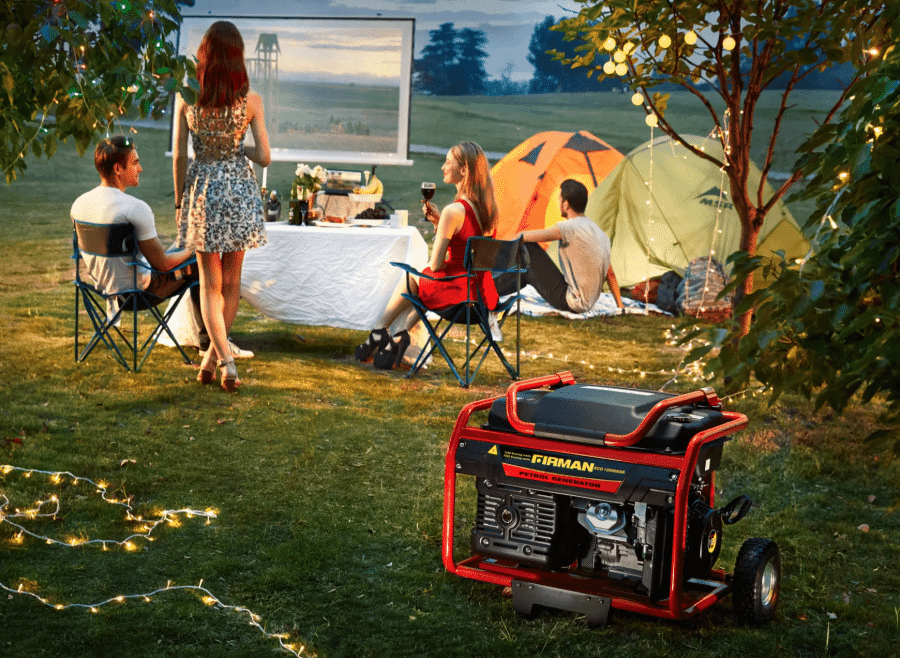
What Makes the Best Quality Generator for Africa?
The best quality generator for Africa delivers steady power, uses fuel sparingly, survives harsh conditions, and comes with spare parts and service close by.
Backup power is routine across the region, not an occasional fix. World Bank survey data compiled by Energy for Growth Hub shows that about 54% of firms in sub-Saharan Africa use a generator as backup, and these firms report roughly 10 outages a month lasting about 6 hours each.
Conditions still differ from place to place, so one specification does not fit every buyer:
- Power supply: Frequent short outages call for easy starting, while sites with no grid need long continuous runtime.
- Fuel supply: The fuel you can buy reliably nearby sets both your running costs and your uptime.
- Operating environment: Heat, dust, and humidity demand sturdy frames and durable engines.
7 Key Features to Compare When Buying a Generator
Compare these seven features side by side before you request quotes, because each one affects either uptime or running costs.
Rated Power and Starting Power
Running watts is what a generator produces continuously, while Starting watts is a short burst. Motor-driven items such as refrigerators and air conditioners draw that burst when they switch on, so sizing on running watts alone can leave the generator stalling at start-up.
Fuel Type and Availability
Choose the fuel your supply chain can deliver reliably. Petrol, diesel, and dual-fuel models all exist, but a strong specification means little when the tank stays empty.
Fuel Efficiency and Running Costs
Fuel is a recurring cost that grows with every outage. In practice, ask for consumption at 25% and 50% load, not only at full load, because your real load is usually lower than the maximum.
Engine Durability and Runtime
Evaluate engine durability using published endurance-test results, maintenance requirements, warranty coverage, and available service support. For runtime, compare the manufacturer's fuel-consumption figures and tested hours per tank at stated load levels. Because runtime varies with electrical demand and operating conditions, use comparable test conditions when evaluating different models.
Voltage and Frequency Compatibility
Before ordering the generator, make sure the voltage and frequency of the generator you choose match your equipment. Because grid standards differ from country to country, importers supplying multiple markets should also make sure that both values on every specification sheet are exatctly what the market needs.
Noise Level and Portability
Power output affects noise levels, while the generator’s structural design, technical features, and quality control also play important roles in determining its noise performance.Open-frame generators are generally louder than silent models with sound-insulating enclosures, while inverter generators can reduce noise by adjusting engine speed to match the load. Compare decibel ratings under the same testing conditions for a fair assessment.
Weight matters as well if crews move the unit between sites, for portable generators, features such as wheels and trolley handles also affect ease of transportation.
Spare Parts and After-Sales Support
A generator is only as reliable as the supplier’s ability to repair it. Ask where parts are stocked, what the warranty covers, whether technical support is available, and how genuine units are verified.
| Feature | Why it matters | What to check |
| Rated and starting power | Prevents overload and stalling | Running and starting watts against total load |
| Fuel type | Keeps the unit running | Fuel sold near your site |
| Fuel efficiency | Sets recurring cost | Consumption at 25% and 50% load |
| Durability and runtime | Limits breakdowns | Test hours; hours per tank |
| Voltage and frequency | Protects equipment | Match to equipment and country |
| Noise and portability | Affects site use | Decibels at a stated distance; weight |
| Parts and support | Limits downtime | Local parts, warranty, service contact |
Which Type of Generator Is Best for Your Needs?
The right type depends on your load, daily runtime, and fuel supply.
Petrol Generators for Homes and Small Businesses
Petrol models suit homes, shops, and small sites that run moderate loads for a few hours at a time. They are generally lighter and cheaper to buy than diesel units. However, petrol is less economical for all-day heavy duty.
Diesel Generators for Commercial and Heavy-Duty Use
Diesel models suit workshops, clinics, and construction sites that run long hours or heavy loads. Diesel engines are built for sustained work and are generally more economical on fuel under continuous load, but they cost more when purchase and weigh more compared with the petrol one.
Inverter Generators for Sensitive Electronics
Inverter generators can be suitable for laptops, phones, and other electronics that require stable power output. Before connecting medical equipment, check the equipment manufacturer's requirements for voltage, frequency, waveform, and total harmonic distortion (THD), and confirm that the generator meets those specifications. Also allow for the starting power required by motor-driven loads such as pumps and air conditioners.
Dual-Fuel Generators for Fuel Flexibility
Dual-fuel models suit buyers who prefers more options, since they switch between two fuels. Output can differ between the two fuels, so check the rating for each one.
| Type | Best for |
| Petrol | Homes, small businesses |
| Diesel | Commercial, heavy-duty |
| Inverter | Sensitive electronics |
| Dual-fuel | Uncertain fuel supply |
How to Choose the Right Generator Size
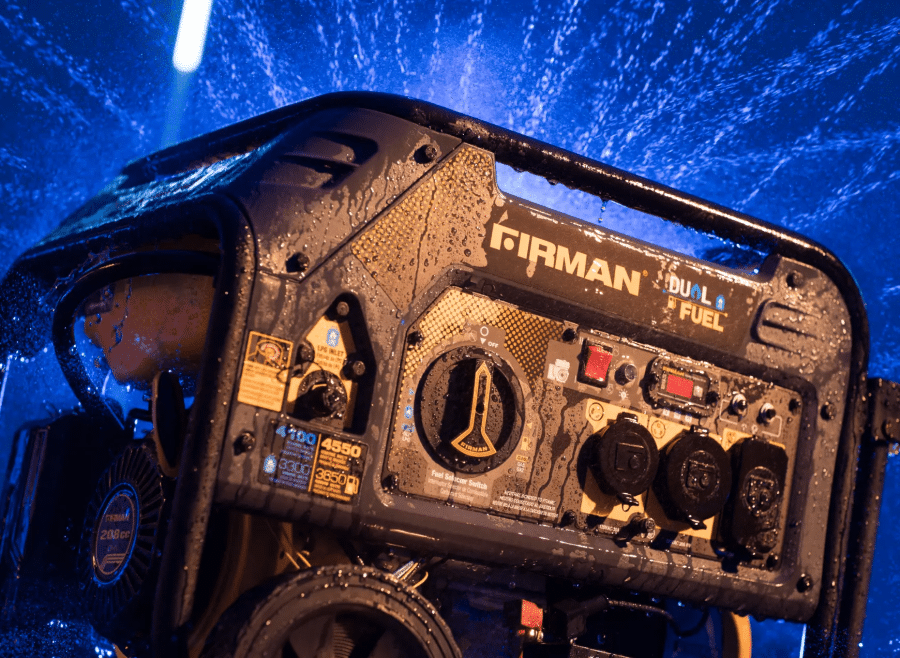
Add up everything you need to power, then pick a model whose ratings cover that total. FIRMAN’s generator buying guide follows the same logic with an online wattage tool, and it advises checking each appliance’s own label because its sample wattage list is only an example. Three steps get you there:
- List the devices that need power. Include everything that will run at the same time.
- Calculate running and starting power. Total each column separately. For example (illustrative figures), a pump rated 1,500 W running and 3,000 W starting plus 500 W of lighting gives 2,000 W running and 3,500 W starting.
- Select a model based on total load, usage frequency, and budget. A unit used daily justifies a sturdier, higher-rated model than one used for occasional backup.
Where to Find a Quality Generator for Your Needs
Start with manufacturers that publish clear specifications and back them with local support, then filter by power, fuel type, and application.
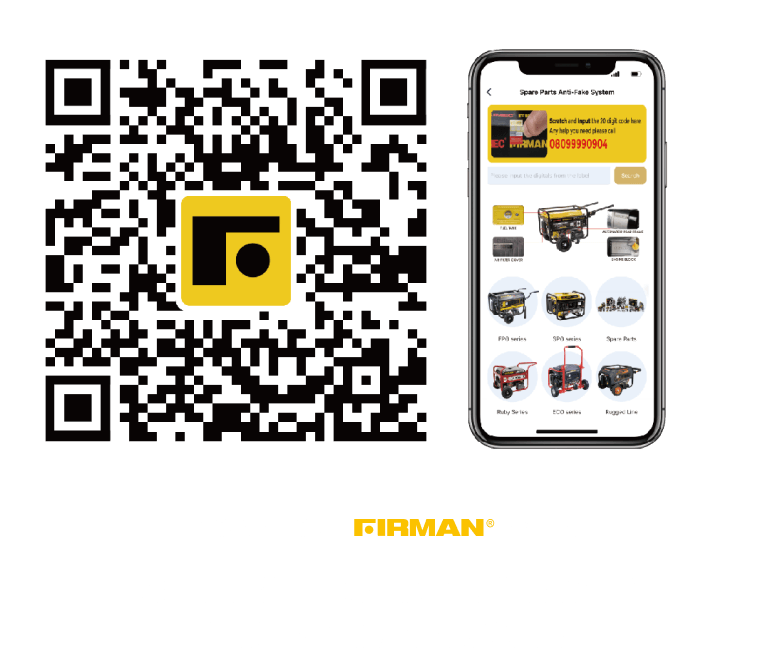
FIRMAN, a power equipment manufacturer, fits that profile. According to the company, it was founded in2002, was the first to manufacture portable generator sets in China, and has been China’s leading generator supplier since 2007. Its product range can be filtered by fuel (petrol, diesel, dual fuel, tri-fuel), start type (recoil, electric, remote), frame (open or silent canopy), and starting watts from 600 W to 1M W. The brand also runs an anti-fake verification system and lists a Nigeria service center.
Before you order, work through this shortlist:
- Power: match running and starting watts to your total load.
- Fuel type: pick petrol, diesel, or dual fuel based on local supply.
- Application: home backup, commercial, or heavy-duty.
- Verification: confirm specifications and local after-sales support.
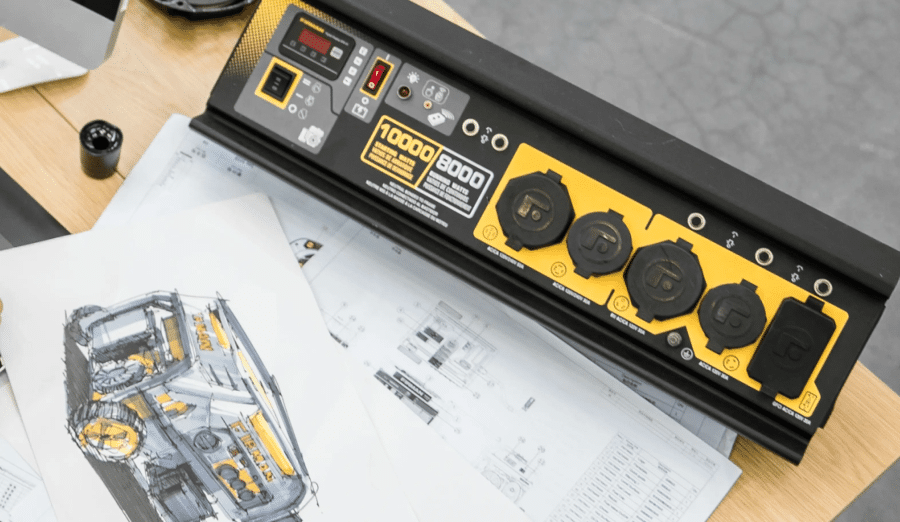
Applying these filters at Explore FIRMAN Generator Products is a practical way to find the best quality generator for your site.
Frequently Asked Questions
What is the best quality generator for Africa?
The best quality generator for Africa matches your load, runs on locally available fuel, withstands heat and dust, and comes with warranty, spare parts, and nearby service. Support after purchase often decides real-world reliability, so confirm it before ordering.
Is a petrol or diesel generator better for African conditions?
Neither wins outright. Petrol suits homes and small businesses with moderate loads and short run times, while diesel suits long hours and heavy loads. Choose based on load, daily runtime, and which fuel is easier to buy near your site.
How many watts do I need for a home generator?
Total the running watts of everything you will power together, then total the starting watts for motor-driven items such as refrigerators. Check each appliance label, because wattage lists are only examples. A generator rated above that total leaves headroom.
Conclusion
Before you buy, confirm these seven points:
- Power ratings
- Fuel costs
- Operating conditions
- Output specifications
- Spare parts availability
- Warranty service
- Noise level and portability
Then compare models against your actual load rather than a headline wattage, and use FIRMAN’s buying guide to check your sizing.
Share


Where to Find Our Social Media
for the Latest Updates?
Follow us on Facebook and Instagram to stay updating more information on our latest promotion activities and news #SUMECFIRMANNG #FORQUALITYLIVING


What can we
help you find today?