For African businesses sourcing generators from China, choosing the right supplier involves more than comparing prices and product specifications. Buyers must verify manufacturing capabilities, confirm generator performance under local operating conditions, and assess the availability of spare parts and technical support.
Without proper due diligence, an apparently competitive purchase can lead to unexpected maintenance costs, delayed deliveries, and costly equipment downtime.At FIRMAN, we recognize that importing generators involves more than evaluating the initial purchase price.
Buyers must also consider product quality, operating costs, spare-parts availability, and long-term service support. A structured supplier evaluation process helps procurement teams identify potential risks and assess the total cost of ownership before committing to a purchase.
Evaluating Vendor Supply Chain Transparency
When evaluating power equipment manufacturers and suppliers in China, importers should map the actual supply-chain roles—who produces, who exports, who invoices, and who receives payment—rather than assuming that a direct factory is inherently preferable. Trading companies can be viable, particularly for smaller or mixed-category orders, but buyers need a clear answer on who is responsible for production, quality control, and after-sales support. An undisclosed or inconsistent role structure is a more material risk than the label itself.
Before placing a bulk order, request the supplier’s business registration details, factory address, applicable ISO certifications, and recent quality inspection records. An independent factory audit or pre-shipment inspection can help verify manufacturing capabilities and confirm that the finished products meet the agreed specifications.
Changes in suppliers or production processes can affect product consistency across different order batches. Buyers should therefore ask how the manufacturer controls component sourcing, documents production changes, and maintains quality standards across repeat orders. Reviewing quality management procedures and batch inspection records can help identify potential risks before they affect subsequent shipments.
Importers may also evaluate the manufacturer’s engineering capabilities, product development activities, and technical support resources to determine whether the supplier can meet evolving application requirements.
Validating Climate-Specific Engineering
Operating conditions should be a key consideration when selecting generators for African markets. High ambient temperatures, airborne dust, humidity, and coastal salt exposure can affect cooling efficiency, filtration performance, electrical components, and enclosure durability.
Experienced electric generator manufacturers should be able to provide technical documentation showing the operating limits and environmental suitability of their generator sets.
Before purchasing, importers should verify cooling system capacity, air filtration configuration, maximum specified ambient temperature, and any required power derating for altitude or temperature. Relevant test reports can help buyers assess whether a generator is suitable for its intended installation site.
Overheating remains the primary cause of premature engine failure across heavy industrial sectors in Sub-Saharan Africa. Machinery destined for coastal regions like Accra or Cape Town requires heavy-duty anti-corrosion treatments.
Saline atmospheric conditions rapidly degrade unprotected steel frames and exposed wiring harnesses within mere months. Quality assurance teams must verify that the factory applies industrial-grade powder coating rather than standard commercial paint.
Auditing Internal Component Sourcing
External chassis design and finish do not reliably indicate the quality of internal components. Buyers should request a bill of materials and verify the origin and specification of critical parts such as fuel injectors, carburettors, and vibration isolators, rather than inferring internal quality from the exterior.
Substandard metallurgy can accelerate wear or failure in specific components, although fuel-system, control, and cooling problems are also major contributors to generator failures. Established manufacturers manage metallurgical consistency through supplier qualification, incoming inspection, and batch documentation; they cannot guarantee identical material properties across every global shipment, but they can establish controls that make deviations detectable before they reach the customer.
Factories cutting corners frequently utilize brittle plastics for critical engine components instead of durable industrial alloys. Auditors should request detailed bills of materials to verify the exact composition of major moving parts.
Engine vibration severely impacts long-term durability if the factory utilizes low-grade rubber isolation mounts. High-quality isolation engineering prevents harmonic resonance from destroying sensitive electronic control panels.
Assessing Post-Deployment Technical Infrastructure
Capital equipment can become unavailable for extended periods if replacement parts are not locally accessible during a regional disruption. A reliable supply path for consumables—filters, gaskets, and spark plugs—supports planned maintenance, and buyers should also consider whether local stock, qualified equivalent parts, or preventive replacement intervals can reduce dependence on a single supply channel.
Vendors must demonstrate established spare-part distribution channels reaching major African industrial hubs efficiently. Relying exclusively on international shipping for basic consumables creates unacceptable and costly facility downtime.
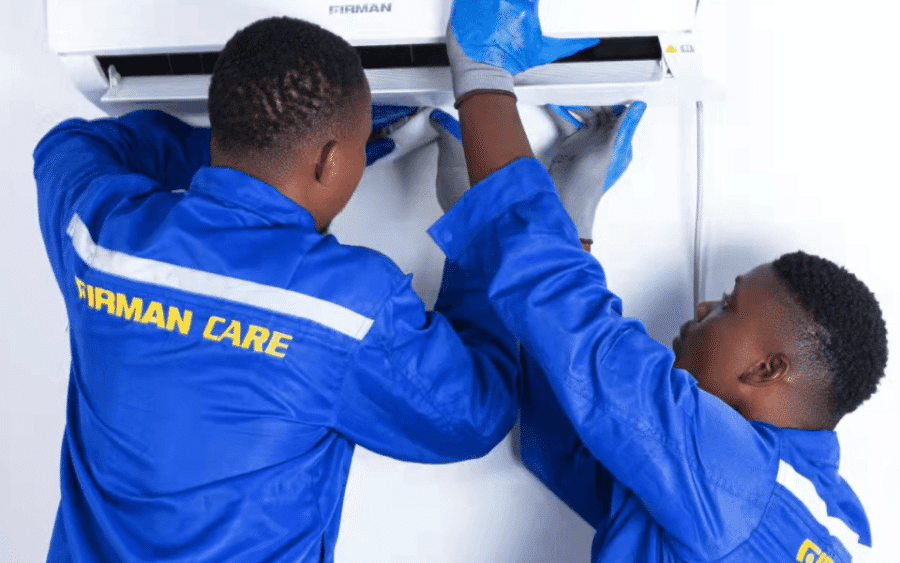
Our dedicated after-sales service network at Firman specifically addresses this critical continental supply gap for commercial operators. We maintain extensive local inventories to ensure maintenance crews never wait weeks for essential replacement components.
Top-tier electric generator manufacturers deploy localized technical support teams to assist regional maintenance engineers directly. Digital troubleshooting portals and comprehensive service manuals must also be available to local operators immediately upon delivery.
Analyzing Warranty Structures and Claim Resolution
Protecting capital expenditure requires examining the exact legal parameters of the factory warranty before finalizing any purchase. Vague warranty documentation often contains hidden clauses that invalidate coverage under standard African operating conditions.
Facility directors must clarify whether the warranty covers full replacement costs or merely provides heavily discounted spare parts. Identifying these specific liability limits prevents unexpected repair expenditures from destroying facility operating budgets.
Factories should provide clear, written protocols detailing exactly how African clients initiate and process warranty claims. Complex or opaque claim resolution processes indicate a vendor who intends to avoid post-sale financial responsibilities.
Returning heavy components across continents can substantially erode the practical value of a warranty, particularly where the buyer bears freight costs in both directions. The economic impact depends on the ratio of part value to shipping cost and on whether the supplier offers local verification followed by replacement-part shipment rather than requiring the original component to be returned first. Procurement teams should clarify the freight-responsibility clause and the availability of any local claim-handling arrangement before finalising the purchase.
Verifying Continental Import Compliance
Clearing heavy machinery through major African ports requires exact adherence to stringent regional trade certifications. Missing or incorrect compliance documents trap expensive cargo in customs holding facilities and incur massive demurrage fees.
Suppliers must possess deep, proven familiarity with SONCAP regulations in Nigeria or strict SABS standards in South Africa. Partnering with experienced power equipment manufacturers ensures all export documentation matches local regulatory frameworks perfectly.
Customs delays rapidly erode any upfront financial savings gained from choosing unverified or inexperienced overseas suppliers. Factories must also handle Pre-Export Verification of Conformity inspections seamlessly before shipping containers depart.
Logistics coordinators should always ask for case studies proving the supplier has successfully navigated specific African port authorities. Securing seamless logistics prevents capital from being tied up in bureaucratic border disputes for extended periods.
Securing Long-Term Industrial Resilience
Long-term industrial resilience depends heavily on selecting a reliable engineering partner rather than a purely transactional trading vendor. Thoroughly vetting overseas factories helps reduce the uncertainties associated with cross-border capital equipment procurement and supports more consistent quality, reliability, and long-term operational performance.We engineer every Firman unit to survive the punishing and unpredictable realities of African industrial environments.
Selecting leading electric generator manufacturers can help strengthen your continental supply chain and enhance operational resilience. Your commercial facility benefits from equipment engineered for dependable performance across demanding environmental conditions. Thorough due diligence helps maximize return on investment and supports the long-term reliability of your enterprise energy infrastructure.
What can we
help you find today?