For a contractor moving between job sites in Ghana or a workshop in South Africa dealing with an unreliable grid, generator selection comes down to more than rated wattage. The machine must start the required equipment, run it without excessive fuel use, and remain practical to transport and maintain.
In practice, the best portable petrol generator depends on the equipment being powered and the conditions at the site. A small shop may need backup for refrigeration and lighting, while a construction crew may need higher starting capacity for power tools. The most suitable model provides enough capacity without adding unnecessary weight or operating costs.
The Best Generator Depends on the Job, Not Just the Wattage
Buyers comparing portable petrol generators will find models designed for very different working conditions. A roadside technician, a contractor moving tools between building sites, and a small shop protecting refrigeration will not need the same generator. Their power requirements and mobility needs can differ significantly.
Portability depends on how often and where the generator needs to move. A workshop unit has different requirements from one transported to construction sites or customer locations each day. Weight and frame design therefore matter alongside electrical output.
Start With the Equipment You Need to Keep Running
Power demand should be checked before choosing a generator. Motors in water pumps, compressors, refrigerators, and workshop machines can draw more power during startup than during normal operation. A generator should therefore be sized for both running demand and the starting load of the largest motor-driven appliance.
The requirements vary across African business and field applications. A small shop may need lighting, refrigeration, and communications equipment, while a farm may depend on a water pump and a construction crew on drills, grinders, and lighting.
That is why power equipment manufacturers offer generators across different output classes to match varying load requirements. The key question is whether a model can start and continuously run the equipment the business depends on, rather than simply how many watts it produces.
A 2.5 kW Generator and a 6 kW Generator Serve Different Jobs
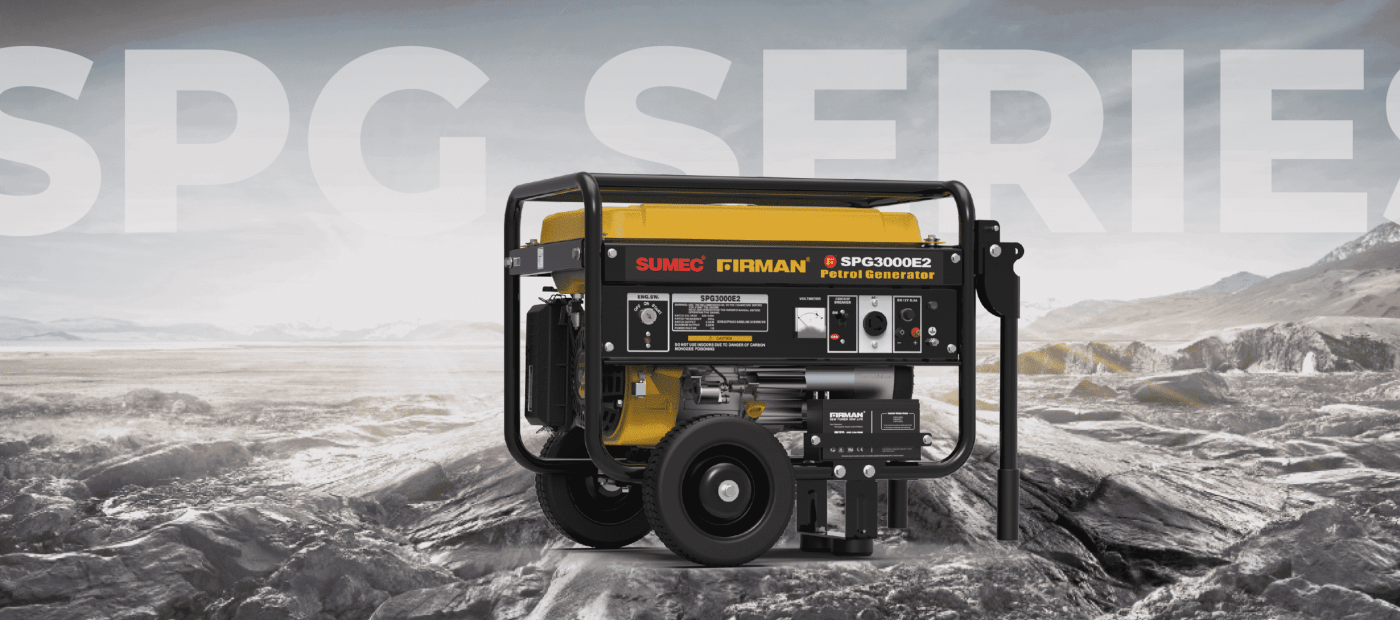
The SPG3000 provides 2.5 kW of running power and 2.8 kW of starting power. It has recoil starting, a 15-liter fuel tank, weighs 43.6 kg, and offers approximately 14 hours of runtime at 50% load. Its size and weight make it suitable for smaller shops, mobile service teams, and field users with lighter loads.
The SPG8800E2 serves a different requirement. It provides 6.0 kW of running power and 6.6 kW of starting power, with electric/recoil starting, wheels, a 25-liter tank, and a weight of 98.5 kg. Its stated runtime is approximately 10 hours at 50% load. The higher output suits heavier applications, although its greater weight makes transport more demanding.
Mobility Matters More on African Work Sites
Mobility becomes especially important when a generator moves between field locations. A contractor in Ghana may take it between unfinished buildings, while a maintenance team may transport it to different customer sites each day.
The working environment also matters. Uneven ground, dust, rain, and limited storage space can affect positioning and protection. Wheels can make heavier units easier to move, while a compact frame can simplify transport in confined work areas.
Fuel, Starting, and Runtime Change the Daily Experience
Businesses should consider fuel availability, tank capacity, and runtime, especially when field teams work away from major urban areas.
Starting method also matters. Recoil starting can suit smaller applications, while electric starting is more convenient for frequent use. The choice should depend on how often the generator will operate and who will handle it.
Site conditions also affect reliable operation. Generators need to run outdoors with adequate ventilation, while moisture, rust, and electrical faults require attention in demanding field environments. Proper placement and routine maintenance can reduce avoidable problems during extended use.
What Business Buyers Should Check Beyond Generator Output
Regularly used generators also require maintenance, spare parts, and technical support. For businesses in African markets, reliable power equipment manufacturers can help reduce downtime, particularly when equipment operates away from major service centers.
At FIRMAN, we offer a broad selection of generator solutions, ranging from portable SPG models to other petrol generator series. Our options extend from compact units for lighter applications to higher-output equipment for more demanding loads.
Which Portable Generator Is the Best Choice?
For many African business and field applications, a 2–3 kW generator can be practical when the load is limited to lighting, refrigeration, communications equipment, small tools, or selected service equipment. Its lower weight also makes it easier to transport between shops, farms, and service locations.
A 5–6 kW model is more appropriate when several tools or motor-driven loads need to operate together. Construction crews, workshops, and larger field operations may need the additional starting and running capacity to avoid overloads during demanding work.
The SPG range reflects this application-based approach, with different power levels and starting configurations for different working requirements. For buyers across South Africa, Ghana, and other African markets, check starting and running capacity first, then consider mobility, fuel access, runtime, and maintenance. The goal is to avoid both an underpowered machine and the unnecessary cost of carrying capacity the business rarely uses.
What can we
help you find today?