A generator can look convincing and still deserve closer inspection. A familiar logo, professional packaging, or an abnormalunusually low price does not prove that the machine came through a legitimate supply channel. For African buyers, this matters because a wrongquestionable purchase can create problems with warranty coverage, spare parts, servicing, and long-term reliability.
We recommend checking authenticity through evidence that can be traced back to the manufacturer. The seller, product identity, physical markings, technical specifications, and after-sales arrangements should all tell the same story.
The First Question Is Not “Does It Look Genuine?”
Start with the seller.
A legitimate purchase should have a clear commercial trail. Ask for the exact model, serial number, invoice, warranty arrangements, and information about the authorized distributor or service channel. A seller who avoids basic questions about product origin should not receive payment simply because the quoted price looks attractive.
The official website identifies its global product range as including portable generators, diesel generators, and other power machinery. It also provides buying guidance, product information, anti-fake verification, manuals, and after-sales support.
For buyers in Nigeria, Ghana, South Africa, Kenya, and other African markets, seller traceability becomes particularly useful when purchasing through independent dealers. We should know not only what machine is being offered, but also where warranty and service questions will be handled.
Follow the Generator's Identity From Seller to Nameplate
A genuine machine should have a consistent identity from the quotation to the physical unit.
Begin with the model number and serial number. The manufacturer's FAQ states that these details are required when customers seek service, together with information such as proof of purchase and a clear photograph of the complete nameplate.
Compare the information on the generator with the quotation, invoice, packaging, manual, and online product information. An unexplained difference should stop the buying process until the seller can clarify it.
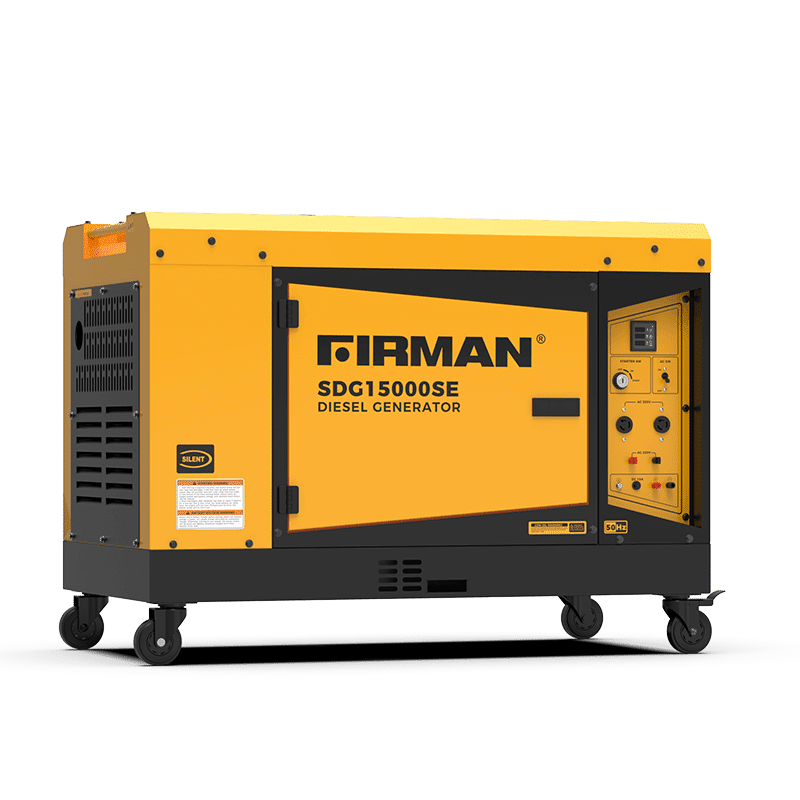
The nameplate deserves particular attention. Check the stated output, fuel type, voltage, frequency, phase, and model designation. Do not assume that two generators with similar external designs have identical specifications.
Documentation should support the physical machine rather than describe a different product. A manual for one model combined with a nameplate for another is a serious warning sign.
Check the Parts That Counterfeiters Cannot Easily Explain
This is where a visual inspection becomes more useful.
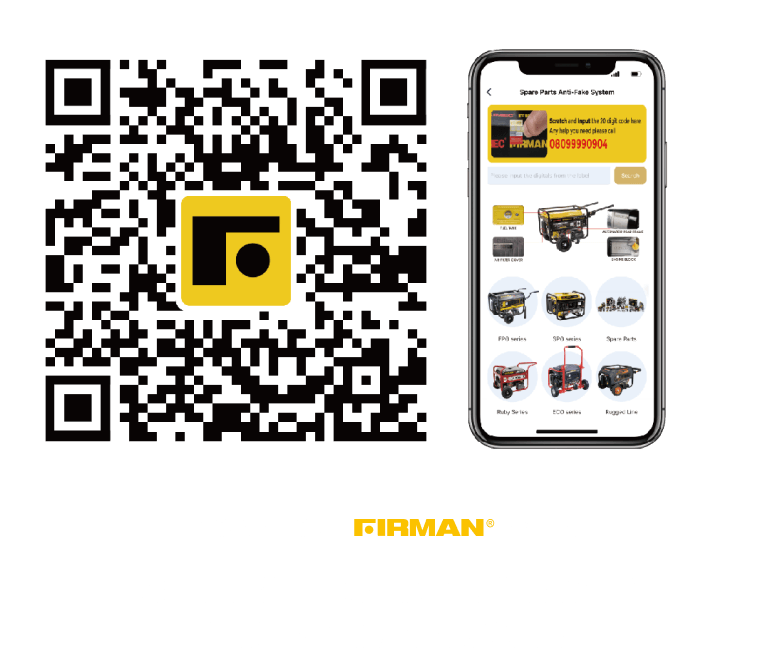
The official anti-fake system provides specific authentication instructions for the Nigerian market. It states that genuine units have engraved anti-fake features on key parts and warns buyers about products carrying incorrect markings. It also provides an anti-fake sticker and digital code verification process.
Do not rely on memory when checking these features. Compare the machine with the current instructions published by the manufacturer. The official guidance specifically warns buyers not to purchase if the anti-fake coating has been scratched or if the required anti-fake label is absent.
Spare parts require similar caution. The authentication system describes identifying features for genuine parts, including markings on piston rings and pistons, as well as authentication information on packaging.
These checks are more useful than asking whether the machine “looks original.” A counterfeit can imitate a color scheme. It is harder to explain a product whose traceable authentication details do not match official records.
Make the Advertised Generator Match the Actual Generator
Technical inconsistencies can expose a questionable sale even when the machine's exterior appears correct.
Ask the seller to state the rated running output and starting output separately. The manufacturer's buying guide explains that running watts describe the power required during normal operation, while starting watts account for the temporary demand of equipment such as motors and compressors.
Fuel type should also match the exact model. The official product catalogue separates diesel generators from petrol, dual-fuel, and other power machinery categories.
This matters in Africa because informal advertisements may combine specifications from different models. A seller could use photographs of one unit while quoting the capacity of another.
Ask for the manufacturer's published specification before making a comparison. If the advertised output, fuel, phase, or configuration differs from the official information, request an explanation in writing.
Price should be treated in the same way. A large price difference does not automatically prove that a generator is counterfeit. However, it is a reason to increase verification rather than reduce it.
A Genuine Machine Should Have Somewhere to Go After You Buy It
Authenticity is not only about the machine sitting in front of us. It also concerns what happens when that machine needs service.
The official support guidance directs owners to authorized service centers for repairs beyond basic troubleshooting and asks customers to have model and serial information available.
The African after-sales network provides another useful checkpoint. The manufacturer states that its accredited distributors and workshops across Africa provide access to genuine goods and after-sales service.
Before purchasing, ask the seller where warranty inspections are performed. Ask who supplies replacement parts and whether the seller is connected to an authorized service channel.
ForWhen evaluating a supplier such as power equipment manufacturers, this support chain is an important part of the buyer's risk assessment, buyers should also consider the availability of warranty, parts, and after-sales support. A machine without a clear service route may become difficult to maintain even if it appears genuine.
We also recommend keeping the invoice, serial number, product photographs, and other purchasing records. These documents can become important if warranty or service assistance is needed later.
Do These Checks Before You Transfer the Money
A practical verification sequence can be completed before payment.
First, identify the seller and ask for the exact model and serial number. Second, compare the physical nameplate with the quotation and official product information. Third, inspect the required anti-fake markings and use the manufacturer's verification system where applicable.
Fourth, check that the advertised output, fuel type, voltage, frequency, and configuration belong to the same model. Fifth, confirm the warranty route and the location of authorized service support.
Finally, keep a complete record of the transaction.
This process is particularly valuable when purchasing a portable diesel generator for a shop, workshop, farm, construction operation, or commercial facility in Africa. A genuine product should have a traceable identity rather than relying on the seller's verbal assurance.
Authenticity is something we recommend verifying before making the purchase, rather than judging from appearance or price alone. FirmanFIRMAN provides product information and verification resources that give buyers a practical way to check the equipment they are considering.
A reliable purchasing decision comes from putting several details together. The seller, model number, serial number, anti-fake markings, technical specifications, and warranty arrangements should all correspond to the same product. Any unexplained mismatch deserves clarification before payment.
Access to robust product verification tools and after-sales resources is especially useful for buyers who want to confirm authenticity and understand where service support will come from after delivery.
For anyone purchasing a portable diesel generator, price should be one of the final factors considered, not the first. If the product identity cannot be confirmed or the seller cannot provide a clear service route, postponing the transaction is a safer choice.
African buyers and distributors also need to think beyond the initial delivery. Generators may remain in service for years, making access to genuine parts, qualified technicians, and warranty support an important part of the purchase itself. A genuine portable diesel generator should come with a traceable source and dependable support—not simply a familiar logo on the casing.
What can we
help you find today?