Contractors managing building projects in growing metropolitan regions often face strict community expectations regarding noise. Operating heavy equipment close to residential estates, schools, or commercial hubs requires careful equipment procurement.
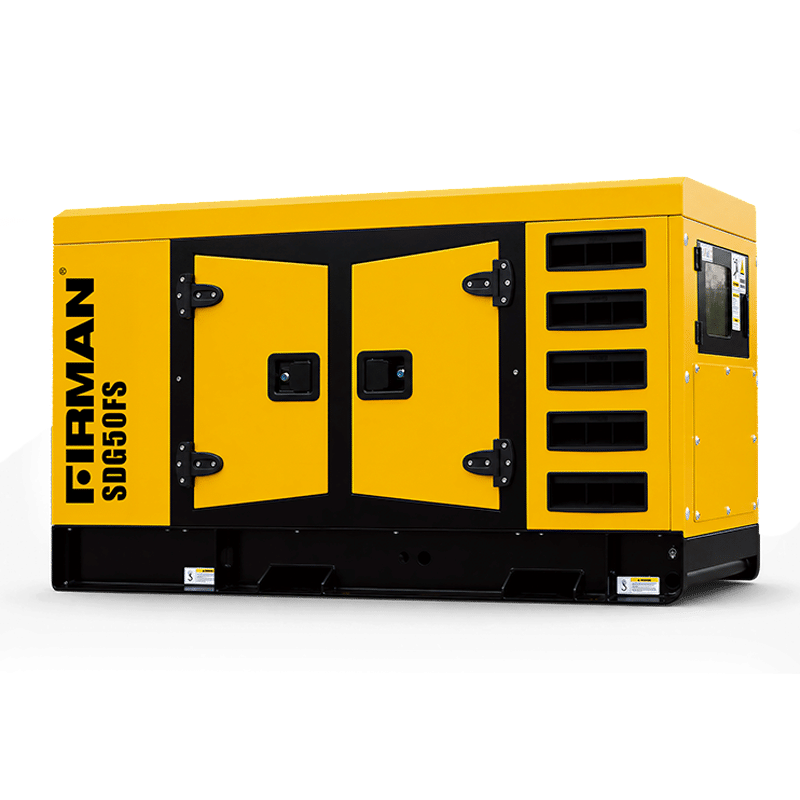
Factors such as severe daily duty cycles, unstable regional grids, and acoustic requirements must be considered when selecting an appropriate power source. We at FIRMAN create power equipment to tackle these problems at the field level. When selecting a dependable construction generator, buyers must look beyond basic specifications to evaluate actual job-site demands and environmental constraints.
How Quiet Does Your Construction Site Need to Be?
Acoustic compliance begins by checking the published noise rating of the equipment under realistic operating loads. Manufacturers typically measure sound levels at a set distance, such as seven meters, but actual site conditions vary significantly.
On a residential development outside Accra, the generator may need to run close to occupied homes while powering tools. A quieter generator can reduce complaints and make early-morning work easier to manage near occupied properties. Reviewing decibel ratings helps contractors identify generators with soundproof enclosures suited to noise-sensitive sites.
Contractors should also consider whether local municipal guidelines enforce specific limits during evening or weekend hours. Evaluating these factors prevents costly fines and keeps your project on schedule without compromising community relations.
Urban construction sites in Johannesburg or similar commercial hubs require machinery that operates without drawing complaints from surrounding tenants. Reviewing sound pressure levels helps contractors select models equipped with specialized exhaust mufflers and acoustic insulation linings.
A sound-attenuated silent generator is an excellent choice for business premises sensitive to engine noise, as it significantly reduces volume levels for surrounding areas. Ensuring compliance with local environmental expectations protects project managers from administrative delays and potential legal penalties.
Balancing strict acoustic limits with high electrical output represents a core challenge for modern procurement teams.
How Much Power Will Your Construction Site Actually Need?
Site productivity depends entirely on whether the power source can sustain continuous output alongside sudden motor surges. Contractors must list every tool that will operate at the same time and separate their running watts from starting watts.
A concrete mixer, water pump, or welding machine may create a much higher electrical demand when its motor first starts. Undersized units frequently trip internal breakers or suffer severe voltage sags during these critical peak engagement phases.
During large foundation pours or frame work, operational bottlenecks can be avoided by choosing a generator that is adequately suited for the job. Industrial-grade alternators equipped with advanced voltage regulators maintain steady output despite rapid load transitions across long shifts.
Matching continuous load capacities protects sensitive diagnostic equipment and ensures smooth tool performance throughout the workday.
Evaluating total electrical demand requires tallying every active compressor, saw, and floodlight before finalizing procurement paperwork. Heavy inductive loads demand robust alternator performance to prevent voltage drops that damage sensitive electronic gear.
Sustaining high electrical loads over extended periods generates intense internal heat within the alternator housing. Adequate ventilation louvers and high-capacity cooling fans prevent thermal overload during peak afternoon temperature spikes in tropical climates.
Modern control panels monitor thermal parameters continuously, automatically alerting operators before damage occurs. Robust thermal management ensures long-term operational resilience under extreme site conditions.
Can It Handle Dust, Heat, and Rough Site Conditions?
Operating machinery across dusty peri-urban building sites or remote regional locations exposes internal components to severe environmental stress. Fine dust particles can quickly collect around engine air intakes and cooling fins during dry seasonal weather patterns.
High ambient temperatures demand robust cooling systems and adequate airflow to prevent excessive heat buildup during long shifts. Selecting rugged canopies with superior dust seals extends overall equipment lifespan dramatically during heavy daily utilization.
Here at FIRMAN, our engineering teams build heavy-gauge steel enclosures designed to withstand harsh operating environments across Africa. Protecting internal components from environmental contamination ensures consistent electrical output when municipal power is completely unavailable.
Fuel quality variations in remote regions can introduce moisture and particulate matter into internal fuel delivery systems. Installing primary water separators and secondary fuel filters prevents costly injector clogs and sudden engine stalls on remote sites.
Contractors must prioritize models equipped with accessible water drain valves to simplify daily pre-start maintenance routines. Reliable fuel conditioning ensures consistent combustion performance under variable operating environments and extended run cycles. Proper fuel management protects mechanical integrity over years of intensive daily utilization.
Can Your Crew Maintain and Move It Easily?
Field maintenance tasks must remain straightforward enough for local technicians to handle independently without causing project delays. Generators equipped with accessible service doors, clear oil drains, and reachable filters encourage proactive upkeep among busy crews.
On dusty sites, daily filter checks and primary water separators are essential for preventing fuel injection clogs. Sourcing readily available replacement filters locally prevents prolonged downtime during unexpected mechanical service intervals.
Transport arrangements also matter on construction sites. The SDG50FS has standard lifting hooks and forklift access, which can simplify transportation and handling. Integrated wheel kits simplify repositioning tasks when labor crews need to shift equipment across muddy or uneven yards. Practical design features reduce physical strain and speed up deployment times across multiple active project zones.
The most silent model may not always be the best option for contractors. It is a system that can start and function well enough while still staying under the noise constraints of the location. Durability against dust and heat, alongside easy service access, determines true long-term value on demanding jobs.
When investing in a new construction generator, careful planning ensures your project remains productive and compliant. At FIRMAN, we focus on practical power solutions that help African contractors work efficiently under any site conditions with a dependable silent generator.
What can we
help you find today?