A generator can look genuine and still be the wrong purchase. In African markets, buyers may encounter unfamiliar sellers, heavily discounted units, incomplete documentation, or machines that appear identical to established products. The real question is not simply how much power the generator can produce. It is whether the machine can be traced, verified, supported, and maintained after payment.
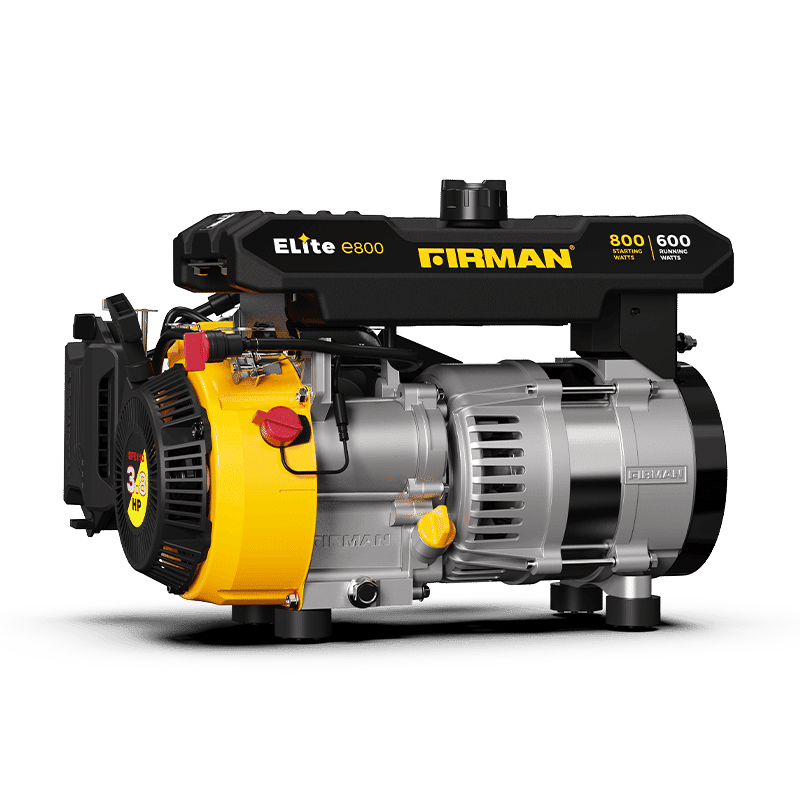
Counterfeit equipment poses severe risks to businesses, contractors, farms, shops, and households relying on backup power. Because a cheap price tag is worthless without authentication and support, our generator buying guide prioritizes thorough verification right from the start over mere surface appearance.
A Low Price Is Not Proof of a Good Deal
Price is often the first detail buyers compare. That can become a problem when a suspiciously cheap generator is presented as an opportunity that must be accepted quickly.
Buyers in Nigeria, Ghana, South Africa, and other African markets should resist making authenticity decisions from price alone. A discount can have legitimate commercial reasons, but price cannot establish whether a generator is genuine.
Look at the complete offer instead. Ask what model is being supplied, where it was sourced, what documentation accompanies it, and who will provide technical support. A seller who can answer these questions clearly gives you more evidence than a seller offering only an attractive price.
Counterfeit products can also become expensive after installation. Missing documentation, unsuitable components, and difficulty obtaining the correct parts can complicate servicing. The initial saving may therefore create additional operational costs.
Check the Seller Before You Check the Generator
The seller is your first line of defence. Before inspecting a machine, establish whether the supplier can provide a traceable transaction and reliable product information.
Ask for the exact model, serial information, purchase documentation, and relevant warranty details. You should also know where the generator will be serviced if a fault develops. Vague answers should encourage further verification before money changes hands.
Nigeria has a particularly useful official anti-fake process for applicable products.
For applicable FIRMAN products in Nigeria, buyers can use the manufacturer's official anti-fake verification process rather than relying solely on the machine's appearance. Buyers should use designated anti-counterfeit features and verification procedures to confirm product authenticity rather than relying solely on the machine's appearance.
The published guidance explains that buyers should use designated anti-fake features and verification procedures rather than relying solely on the appearance of the machine.
South African and Ghanaian buyers can apply the same principle even when a particular verification mechanism differs by market. A legitimate purchase should have a clear connection between the seller, product identity, documentation, and support channel.
Use the Generator’s Identity to Test Its Authenticity
A generator has identifying information that should be treated as evidence, not decoration. Compare the model and serial information on the machine with the paperwork supplied by the seller.
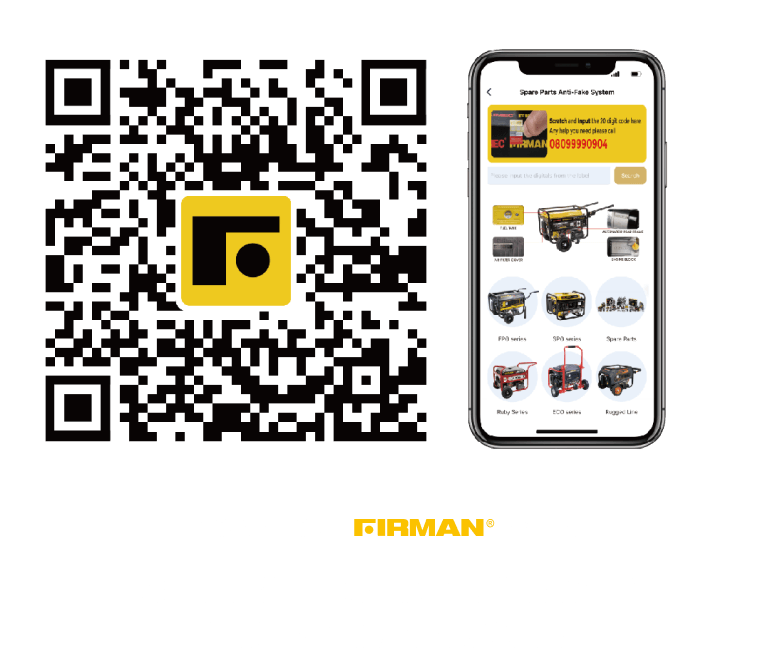
FIRMAN products in Nigeria may feature an anti-counterfeit sticker and digital code verification for authenticity checks. Products with a missing or already-scratched anti-counterfeit label should not be purchased.
FIRMAN's published anti-fake guidance for Nigeria describes verification features including an anti-fake sticker and digital code verification. The guidance also warns buyers against purchasing applicable products where the relevant anti-fake label is missing or has already been scratched.
FIRMAN Anti-Fake System
Do not stop after seeing a code. Follow the manufacturer's current verification procedure and check whether the result corresponds with the machine you are being offered.
The same discipline applies to model information. If the paperwork identifies one model while the physical machine shows another, stop the transaction until the discrepancy is explained. Small inconsistencies are worth investigating before a large B2B purchase is completed.
Do Not Let Packaging Make the Decision
Counterfeit equipment can imitate the visual elements that buyers recognize first. Logos, colours, labels, cartons, and general machine styling may look convincing during a quick inspection.
Packaging should therefore support verification rather than replace it. Compare the information on the packaging with the actual generator, documentation, and identification details. A professional purchase should produce a consistent set of information across these sources.
The product, packaging, documentation, and identification details should present a consistent set of information.
We also recommend avoiding decisions based on photographs supplied through messaging platforms. A picture may show a genuine-looking product without proving that the same machine will arrive at your site.
For African buyers purchasing through distributors or regional traders, physical inspection can be particularly useful before accepting a large order. If inspection is not possible, request sufficient documentation and use the manufacturer's official channels to clarify verification questions.
Ask What Happens After the Sale
A genuine generator purchase should make sense beyond the moment of delivery.The purchase of generator goods should be evaluated beyond the moment of delivery. Ask the seller where you can obtain service, replacement parts, manuals, and technical assistance for the specific model.
That question is especially relevant to generator maintenance. Routine servicing requires identifying the correct equipment and following the manufacturer's instructions. FIRMAN provides maintenance guidance and product information to help owners understand basic care requirements.
Routine servicing depends on knowing the correct equipment and following the manufacturer's instructions. FIRMAN's FAQ resources provide maintenance-related guidance and other product information that can help owners understand basic care requirements.
Service records should also be retained. Keep the invoice, model information, serial number, warranty documents, and maintenance history together. These records make it easier to establish the identity and history of the machine when technical support is required.
For a Nigerian workshop, Ghanaian business, or South African commercial operation, after-sales support should form part of the buying decision. If a seller cannot explain how support will work, investigate the supply chain before proceeding.
Use a Verification Checklist Before You Pay
Before payment, we suggest treating authentication as a short procurement procedure rather than an informal visual inspection.
First, confirm the seller and obtain complete transaction details.
Second, record the generator's model and serial information and compare them with the supplied documentation.
Third, inspect the applicable anti-fake features and follow the manufacturer's official verification procedure.
Fourth, compare the machine with the documented product information. Do not assume that familiar branding proves authenticity.
Fifth, confirm who will handle warranty and technical support after delivery.
Finally, keep all purchase and product records. They provide useful evidence throughout the machine's working life.
FirmanFIRMAN treats these checks as part of responsible generator purchasing because authenticity and serviceability are closely connected. Buyers should not have to choose between verifying a product and understanding how it will be supported.Product verification and after-sales support should therefore be checked as part of the same purchasing process.
A careful generator buying guide should ultimately make the purchasing decision easier, not more complicated. Start with the seller, verify the machine's identity, inspect the evidence behind the branding, and establish the after-sales route before committing funds.
To secure a dependable purchase in Africa, look beyond surface appearances and low price tags. Authentic quality requires pre-payment checks and a paper trail that supports every phase, starting with the first inquiry and extending directly into generator maintenance and future support.
What can we
help you find today?