Frequent power grid instability across African markets demands strategic equipment procurement, rather than reactive emergency purchases. When evaluating primary or backup power solutions for commercial sites in Nigeria, South Africa, or Ghana, technical specifications must align with harsh daily operational realities. Industrial and retail managers face unique challenges, including extended load-shedding schedules and volatile local fuel supply chains.
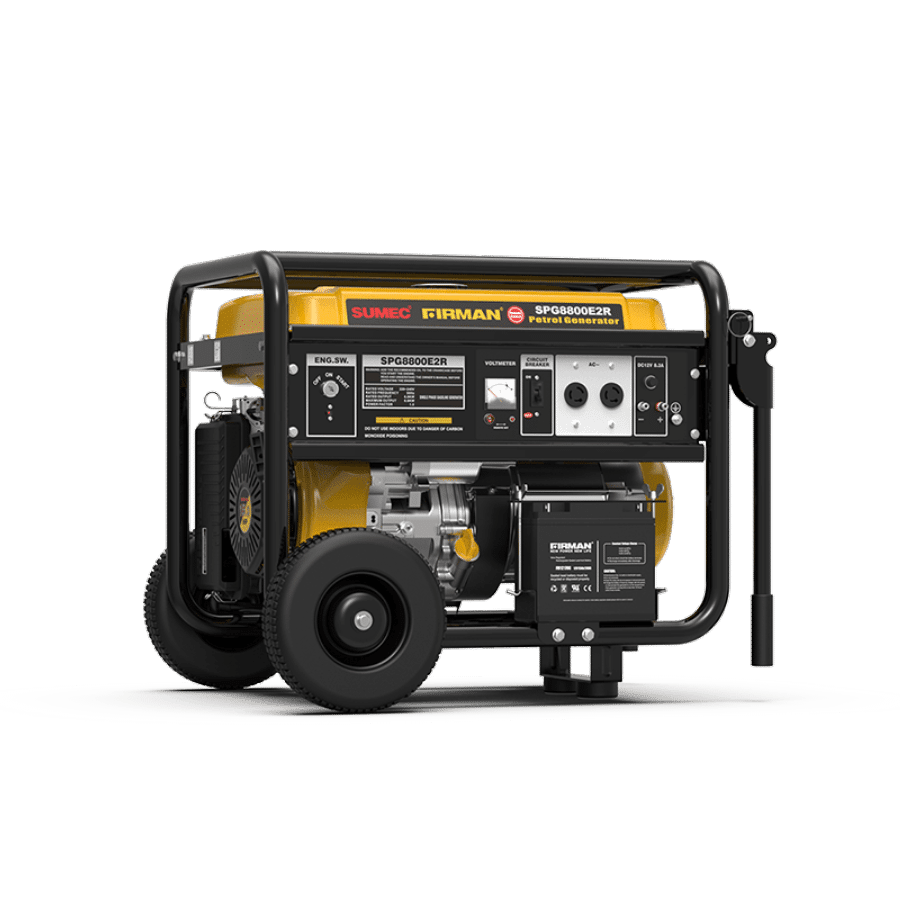
Before placing an order, we suggest comparing the fuel options, starting system, and noise specifications of each shortlisted model. Buyers should also check local operating requirements and confirm that the generator is suitable for the intended installation.
In this guide, we compare three practical considerations: fuel type, starting method, and noise level. Our aim is to help buyers understand the trade-offs between different generator configurations and choose a model that matches their power needs and operating conditions.
Evaluating Fuel Types Against Regional Supply Chain Realities
Selecting between petrol, diesel, and dual-fuel systems ultimately determines your long-term running costs and supply chain resilience. Petrol units account for a large share of the lower-capacity and residential backup segment, driven by their relatively lower upfront cost and immediate deployment capability. These configurations are highly effective for small retail outlets, optical communication nodes, or mobile workstations where fuel can be procured locally each morning.
Establishing proper generator maintenance protocols begins immediately after selecting your fuel architecture, as sourcing clean, uncontaminated petrol prevents premature carburetor degradation.
High-demand commercial facilities facing prolonged outages require much heavier, more robust solutions capable of sustaining baseline loads. Diesel systems deliver superior fuel efficiency under continuous heavy loads, significantly reducing the frequency of required refueling cycles.
Furthermore, diesel engines generally lack spark plugs, which simplifies certain aspects of long-term mechanical troubleshooting. Alternatively, dual-fuel systems integrating natural gas or propane provide critical operational flexibility during regional petrol shortages.
This adaptability ensures your industrial workflow remains uninterrupted regardless of unexpected local supply chain disruptions. In regions where liquid fuel delivery is notoriously unpredictable, having a secondary gas option dramatically increases your site's operational resilience. Careful evaluation of your daily load profile and local infrastructure guarantees your facility will not overspend on consumable fuels.
Aligning Starting Mechanisms With Downtime Tolerances
A frequently overlooked factor in any professional generator buying guide is the ignition method, which directly impacts site readiness and staff safety. Recoil pull-starts provide mechanical engagement that does not depend on battery health or electronic sensors. This traditional manual method suits remote environments with dedicated operators on-site who can physically interact with the equipment, although like any starting system it still depends on proper fuel, ignition, and maintenance conditions.
Conversely, electric key-starts eliminate physical strain and allow instant deployment for heavier, higher-capacity units. Relying on physical pull-starts for massive industrial units is inefficient and can delay power restoration during sudden grid collapses. For critical infrastructure, ATS, can automate switching between utility and generator power. Remote start offers the convenience of starting the generator from a distance..
These advanced modules detect grid failures and trigger the power switch rapidly, minimizing downtime for sensitive servers or cold-chain storage facilities.
At Firman, we engineer our equipment to include high-tech Li-ion batteries within our advanced electric-start models to guarantee reliable mechanical engagement. Choosing the correct ignition system ensures your commercial facility transitions to backup power smoothly, without disrupting core business operations or client services.
Navigating Urban Noise Regulations With Proper Acoustic Profiles
Noise pollution is heavily monitored and regulated in commercial business districts and dense residential estates across Accra, Lagos, and Johannesburg. Procurement teams must deliberately differentiate between open-frame models and silent-canopy designs based on strict local acoustic requirements. Standard open-frame models deliver excellent airflow and maximum cooling for rugged outdoor worksites, but they naturally generate higher decibel outputs.
If your daily operations border retail spaces, medical clinics, or quiet suburban neighborhoods, investing in silent-canopy-style models is strictly non-negotiable. These specialized units utilize advanced mufflers, integrated spark arrestors, and precisely engineered sound-dampening enclosures to drastically lower the acoustic footprint. Deploying a silent unit actively prevents local regulatory fines and maintains a highly professional atmosphere without sacrificing output capacity.
Proximity to neighboring businesses is a practical factor in selecting an acoustic profile that can meet applicable local noise limits. Regulations differ by jurisdiction, so buyers should confirm the relevant dBA thresholds and enforcement expectations for the specific site rather than assuming a uniform standard. Ignoring this vital parameter can rapidly lead to operational shutdowns or costly legal disputes driven by persistent noise complaints from adjacent property owners.
Understanding the correlation between engine size, enclosure design, and sound output is a critical competency for any facility manager tasked with maintaining corporate compliance standards.
Integrating Long-Term Support Into Your Procurement Strategy
Financial planning for commercial power equipment extends far beyond the initial purchase price, encompassing long-term fuel consumption, replacement parts, and labor. Before purchasing a generator, consider its recommended service intervals, maintenance requirements, and expected running costs. We recommend reviewing the owner's manual and confirming the availability of qualified service support in the intended market.
Procurement managers must verify the widespread availability of local OEM parts, specifically spark plugs and specialized air filters, before committing to a specific fleet.
Inferior equipment quickly transforms into a financial liability when local technicians cannot source the correct replacement components during an emergency. A structured, documented approach to routine generator maintenance keeps your equipment functioning within its optimal fuel-efficiency ranges. This proactive methodology ensures the unit survives years of demanding African grid conditions without requiring premature replacement.
Instead of endlessly searching for another generic generator buying guide, evaluate your specific site demands, fuel access, and strict operational limits. Choosing an established brand with published warranty terms and local service support, such as Firman, can reduce procurement risk. Buyers should still verify the specific model’s warranty coverage, parts availability, and service network for their market before relying on brand reputation alone.
We understand that reliable power generation is the backbone of regional economic growth. Furthermore, Firman engineering ensures that every single specification meets the highest technical standards for continuous industrial and B2B applications.
What can we
help you find today?